
Justus Knight – RR News Update! June 21st, 2026
Welcome to Political Psycho Nation. This isn’t a recap show; it’s an ongoing education in political psychology. The Clinical Analysis: Tracking 8+ years of U.S. & global chaos. Subscribe to learn how power actually communicates. 🔒 Extended deep-dives & reports: www.restrictedrepublic.com
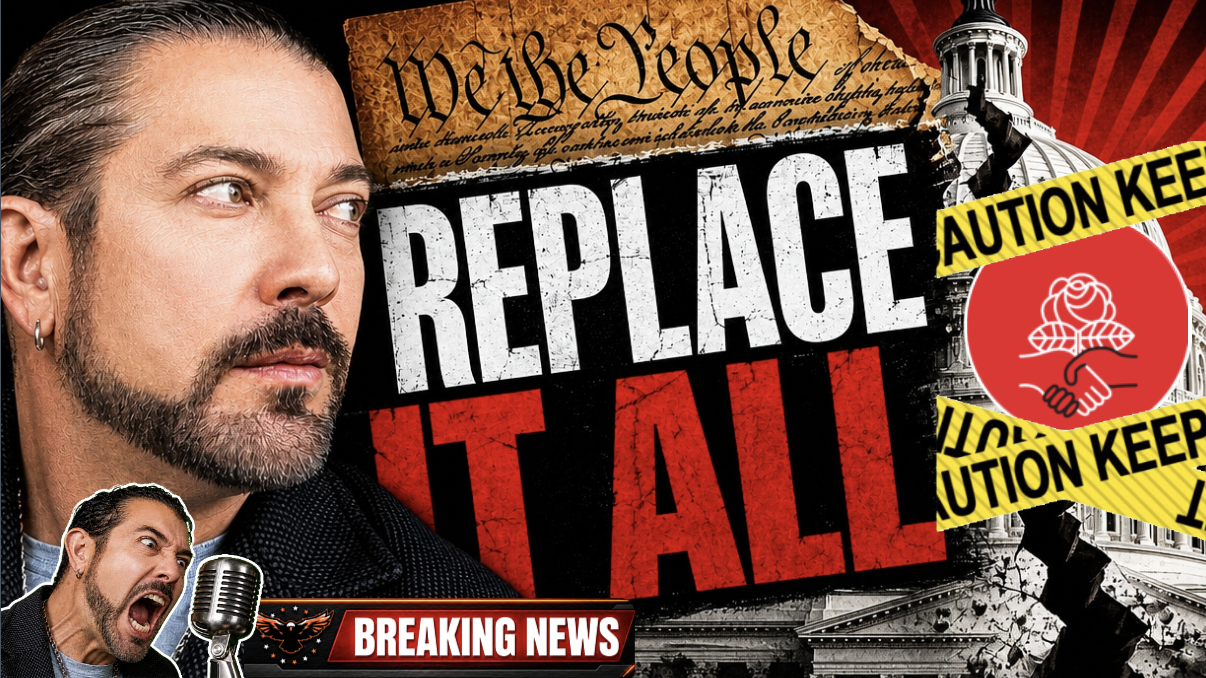
VIDEO TITLE: They Don’t Want To Win Government… They Want To Replace It!
DESCRIPTION
#DSA, #DemocraticSocialists, #Socialism, #Constitution, #SupremeCourt
DSA, Democratic Socialists of America, socialism, the Constitution, the Senate, Supreme Court, Electoral College, and 2026 elections collide in a new political blueprint that raises one massive question: reform or replacement?
The Democratic Socialists of America platform calls for major structural changes to the American political system, including changes to voting rules, the Electoral College, Congress, and the Supreme Court. But newer reporting claims DSA leadership language goes even further, with ideas involving abolishing the Senate and replacing or subordinating major constitutional institutions.
This episode breaks down what the DSA platform actually says, what critics are warning about, and why this debate matters far beyond left versus right politics.
Because the real issue is not just socialism.
The real issue is government power.
🔔 Hit the notification bell and subscribe so you never miss a breakdown!
CHAPTERS
0:00 DSA’s Blueprint
1:40 What The Platform Actually Says
4:40 The Psychology Of “Democracy”
5:55 Why The Constitution Is Supposed To Be Annoying
8:50 This Isn’t Just Left Or Right
9:40 From Activism To Electoral Power
10:40 The Movement is Larger Than You Imagined
11:40 Democracy Or Consolidation – Final Warning
Pinned Comment
DSA says this is democracy. Critics say it’s replacement. Where’s the line between reforming the system and dismantling it?
HASHTAGS
#DSA, #DemocraticSocialists, #Socialism, #Constitution, #SupremeCourt, #Senate, #ElectoralCollege, #JustusKnight, #PoliticalPsycho, #GovernmentPower
Join Us At The Following:
- Restricted Republic News: https://restrictedrepublic.com
- Rumble: https://rumble.com/c/RestrictedRepubli
- Facebook (Justus Knight) : https://www.facebook.com/justus.knight.547/
- Facebook (Lisa Haven) : https://www.facebook.com/lisa0haven
- Instagram (Justus Knight) : https://www.instagram.com/justusaknight/
- Instagram (Lisa Haven) : https://www.instagram.com/lisa__haven/
- Truth Social: https://truthsocial.com/@RestrictedRepublic
- Telegram: https://t.me/restrictedrepublic
I love you all, until next time, Godspeed and God Bless,
Justus Knight
REFERENCES :
https://platform.dsausa.org/
https://platform.dsausa.org/democracy/
https://platform.dsausa.org/program/
https://www.city-journal.org/article/democratic-socialists-of-america-workers-deserve-more
https://www.dsausa.org/
https://electoral.dsausa.org/our-campaigns/
Because politics isn’t about what they say…It’s about what they’re trying to make you believe. Every broadcast decodes the real signals: what they emphasize, what they dodge, what they repeat, and what they’re quietly preparing you for. From presidential statements to geopolitical flare-ups and economic pressure campaigns, we connect the dots before the narrative becomes “official.”
This channel is built for people who can feel the manipulation — and want receipts. If you’re here for mainstream talking points and safe little opinions, keep moving.
If you want the truth behind the performance…Welcome to the Nation.
COMMUNITY QUIZ
Is abolishing or weakening major constitutional checks “democracy” or “power consolidation”?
I need to read more first
Needed reform
Dangerous power grab
Depends who controls it
Medium Article
They Don’t Want to Win Government. They Want to Replace It.
Every political movement eventually faces the same question.
Is it trying to reform the system?
Or is it trying to replace it?
That question is suddenly front and center following renewed attention on the platform and organizational goals of the Democratic Socialists of America (DSA), one of the most influential socialist organizations operating in American politics today.
Supporters view the organization as a vehicle for expanding democracy and empowering working-class Americans. Critics see something very different: a movement increasingly willing to dismantle constitutional structures that stand in the way of its political objectives.
The debate isn’t really about socialism.
It’s about power.
And more importantly, who controls it.
The Difference Between Policy and Structure
Most political debates revolve around policy.
Taxes.
Healthcare.
Immigration.
Education.
Foreign policy.
Those arguments happen within the framework of the American system.
The current debate surrounding DSA is different because it increasingly centers on the framework itself.
DSA’s public platform advocates significant changes to the structure of American governance, including eliminating the Electoral College, expanding voting rights, restructuring representation, reducing the influence of certain institutions, and altering the balance of power between branches of government.
Other reported proposals from within the organization’s leadership circles have sparked even greater controversy, including discussions surrounding the Senate, the presidency, and the role of the Supreme Court.
Whether those ideas become official policy is almost secondary to the larger issue.
The conversation is no longer about changing laws.
It’s about changing the machinery that creates the laws.
Why This Matters
The American Constitution was not designed for speed.
It was designed for restraint.
The Founders were deeply suspicious of concentrated power.
Not because they distrusted one political party over another.
Because they distrusted human nature.
Checks and balances exist because people eventually abuse authority.
The Senate exists to slow legislation.
The Supreme Court exists to review it.
Federalism exists to divide it.
The Electoral College exists to distribute it geographically.
None of these institutions were created because they were efficient.
They were created because liberty often survives where power is fragmented.
That design frustrates everyone.
And that’s precisely the point.
The Universal Temptation
Every political movement believes it will be the exception.
Every movement believes it will use power responsibly.
Every movement believes the danger comes from the other side.
History offers a less optimistic assessment.
Whether the ideology is socialist, nationalist, progressive, conservative, populist, or libertarian, political organizations tend to support limitations on power when they are out of power and support expansions of power when they gain it.
This pattern repeats across generations, countries, and political systems.
The names change.
Human behavior does not.
That’s why constitutional guardrails matter.
They are not designed to protect us from the politicians we oppose.
They are designed to protect us from the politicians we support.
Because eventually someone else inherits the authority we helped create.
Reform or Replacement?
Supporters of DSA argue that many American institutions no longer reflect democratic realities.
They contend that reforms are necessary to create a more representative government.
That is a legitimate argument worthy of public debate.
Critics counter that many of these proposals move beyond reform and into structural replacement.
They argue that weakening independent institutions ultimately concentrates power rather than disperses it.
That is also a legitimate argument worthy of public debate.
The challenge is determining where reform ends and replacement begins.
Reasonable people can disagree on that line.
But they should not ignore the question.
The Real Issue
The most important lesson from this debate has nothing to do with socialism.
It has nothing to do with Republicans.
It has nothing to do with Democrats.
The real issue is whether any political movement should be trusted with fewer restraints on its authority simply because its goals appear noble.
History suggests caution.
Power rarely presents itself as power.
It presents itself as necessity.
It presents itself as progress.
It presents itself as fairness.
It presents itself as democracy.
Yet regardless of the language used to justify it, concentrated authority remains concentrated authority.
The names change.
The slogans change.
The promises change.
Power remains power.
And a constitutional republic survives not because it trusts those who hold authority, but because it limits them.
That principle is worth remembering no matter who happens to be in office today.
Because today’s political ally can become tomorrow’s political opponent.
The Constitution was built with that reality in mind.
The question Americans must decide is whether those restraints are outdated obstacles—or essential safeguards.
The answer may determine far more than the future of any single political movement.
Categories: Politics
 Justus Knight News
Leave a comment